Research
Ten years of asking how different minds work.
Research with New Zealand's tech sector, two national surveys, a university study, and years inside organisations. What was asked, who with, and what was found.


This work began at Unlock Innovation, founded by Dorenda Britten and Chris Cole. It continues as part of Peppr.
The programme, stage by stage
2022
Is the tech skills shortage a recruitment problem?
The starting assumption was that New Zealand's skill shortages were, at least in part, a recruitment issue linked to dyslexia. The research told a different story. The problem was culture, not recruitment: dyslexic people were masking their difficulties at work, and HR teams were making assumptions about them.
2022
NZTechCanterbury TechIs the tech skills shortage a recruitment problem?
The starting assumption was that New Zealand's skill shortages were, at least in part, a recruitment issue linked to dyslexia. The research told a different story. The problem was culture, not recruitment: dyslexic people were masking their difficulties at work, and HR teams were making assumptions about them.
2023
Callaghan InnovationCanterbury TechFunded to move from findings to a product.
With the research complete, the team secured an Arohia Seed Grant from Callaghan Innovation to build and test a minimum viable product: a programme to lift dyslexic thinkers into roles that fit their skills rather than their deficits, with the social as well as the business case considered from the outset.
Read: Building National Innovation Capacity2024
NZTechTwo nationwide surveys on hidden dyslexic talent.
Survey one, The Hidden Potential of Dyslexia, asked organisations five questions about unrecognised and under-used dyslexic talent. It gained wide traction and, by the team's account, helped focus people on a missed opportunity inside their own business. A second survey followed mid-year.
Read: Moving Towards Action2025
SeequentUniversity of CanterburyIn progressDoes deliberately including dyslexic minds make teams more innovative?
The second stage of research, founded in September 2025 with Seequent and the University of Canterbury, investigates the link between the deliberate inclusion of dyslexic minds in teams and increased innovation. The working position: super thinking only works when paired with sequencing, prioritising and detail management, so the question is how to design teams for both.
Read: Revealing the Underground2026
PepprPeppr is founded.
Four co-founders bring a decade of findings, workshops and coaching together with the engineering to build on them: a product that adapts a team's workflows to how each person thinks, with no diagnosis, no disclosure, and no one singled out. The research continues.
What we found so far.
20%
of your team, most of them undisclosed
An estimated 1.2 million New Zealanders are dyslexic. That's likely one in five of any team, most of them undisclosed.
It was culture, not recruitment.
The shortage of tech talent wasn't a hiring pipeline problem. Dyslexic people were already in the building. The way work was organised kept their strengths hidden.
Masking is the default.
Adapted dyslexics develop strategies to get through school and work without ever being identified, often working harder, longer and quieter to hide the effort. HR assumptions about dyslexia made disclosure feel unsafe.
The skills match.
The World Economic Forum's list of the skills that matter most is almost a perfect match for what the research kept finding in the dyslexic community. When given the opportunity.
- Complex problem solving
- Critical thinking
- Creativity
- Analytical thinking
- Resilience
Take it with you.
 Free e-book
By Chris Cole 23 pages
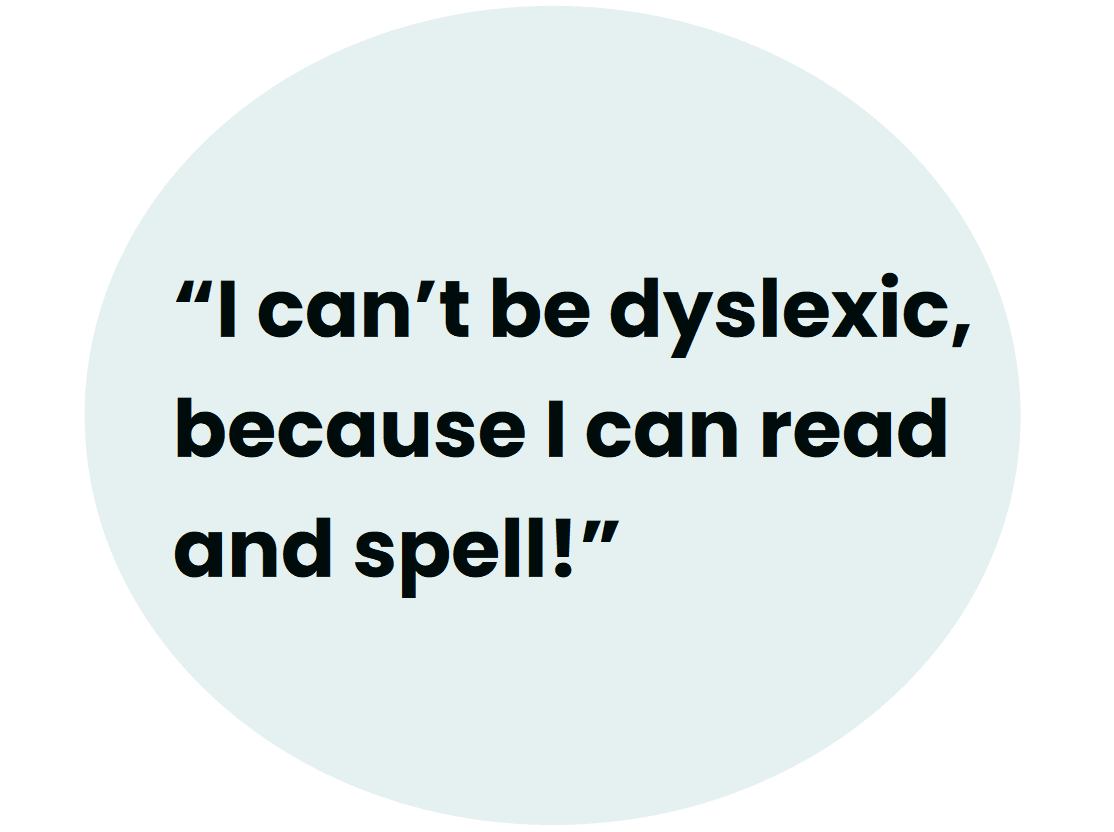
I can't be dyslexic, because I can read and spell!
A guide to adapted dyslexia: the people who have developed strategies to navigate education and work without ever being formally identified. How their thinking works, where it adds value, and where it takes more effort.
- About adapted dyslexics
- Characteristics
- Dyslexic thinking defined
- In the workplace
- Quick checklist
Download the PDF (2.5 MB)
One page for managers, HR and teams
How to lead for diversified thinking
Action 1 of 7
Build awareness
Learn what dyslexia and diverse thinking actually mean, and share it with your team so differences are recognised as strengths.
Hear it from people who live it.
Panel for Dyslexia Awareness Month, with Flux B2B
Different by Design: how diverse thinkers unlock open innovation
Business and innovation leaders who think differently on how dyslexic thinking adds value to innovation, strategy and leadership. With Paul Reid, Dave Veronese, Michelle Sharp, Aaron Jay and Chris Cole, facilitated by Michael Friedberg.
Watch on YouTube (opens in a new tab)University of Canterbury Business School, Thought Leadership Series
Dyslexic thinking: an untapped strategic advantage for modern business
A panel on dyslexic thinking and its impact on leadership and the workplace.
Watch on YouTube (opens in a new tab)
Research partners and funders
- NZTech
- Canterbury Tech
- Callaghan Innovation
- MBIE
- University of Canterbury
- Seequent
- Flux B2B
- Literacy Aotearoa
The story as it happened, from the newsletter
 Revealing the UndergroundBy Chris Cole2 min
- About Adapted DyslexicsBy Chris ColeAdapted Dyslexia Checklist3 min
 Dyslexic Skills for 2025By Dorenda Britten3 min
 Moving Towards ActionBy Dorenda Britten2 min
 Unlock Innovation Launch SurveyBy Dorenda Britten1 min
 Building National Innovation CapacityBy Dorenda Britten2 min
One email a month on how different minds do their best work.
Research, interviews and practical ideas from the Peppr team. No fluff, no pitch.